Edge robotics · Performance report
On a computer a robot carries, full–precision quality that lifts the success rate
On the small AI computer a robot carries onboard, our engine raised a standard robotics task’s success rate from a reproduced public reference engine’s 20 to 84 — nearly the full–precision ceiling of 90 — while keeping precision fully intact and running efficiently on that same edge board.

01What this is about
Three layers: robot AI, the edge device, and the “engine” — the software that runs it.
Today’s robots see with a camera, read an instruction a person gives them, and move an arm or wheels. An AI model that does all three at once is called a VLA (vision–language–action) model — a single brain that fuses sight, language understanding and motor control.
Where you run that brain is the problem. Running it on a large cloud server is easy, but a robot that loses its connection, or reacts a tenth of a second late, drops what it is holding. So a genuinely useful robot has to run its AI directly on a small computer inside its own body — running “at the edge.”
But a small computer has limited power, memory and compute. For the very same model, which engine software runs it changes speed and accuracy several-fold. The engine is the performer that plays the model’s “score” on real hardware — the “instrument.” This report is about that performer: our engine.
02SmolVLA — a robot brain that sees, reads, and moves
SmolVLA is an open, published small VLA model. At roughly 450 million parameters it is “small” by today’s standards — and that is exactly what suits it to edge robots: small enough to fit on a compact device.
A VLA model runs this loop continuously. Because every action feeds back as the next input, a small error can compound across the task — which is what makes the closed–loop success rate an honest, demanding measure.
The standard test for this model is LIBERO–Spatial. On a virtual tabletop the robot is given tasks like “move this object over there” 100 times, and you count how many it completes. What matters is that this is a closed–loop test — each action the model takes feeds back in as the next input, continuing until the task finishes, exactly the way a real robot interacts with the world. A small wobble partway through can derail the whole task, which makes it the most honest and demanding kind of evaluation.
03Jetson AGX Orin — the computer a robot carries
The Jetson AGX Orin is an edge AI computer made by NVIDIA. A single palm–sized board, it goes inside devices like drones, robot arms and autonomous–driving kits. Compared with a datacenter GPU it has far less power and compute — but it runs in the field, without a wall socket.
So performance on this device is the real test. Being fast on a huge server is a given; being fast and accurate on a small, power–limited Orin is far harder. Every measurement here was taken on one of these actual Orin boards.
04The result — same model, same device, a better performance
The same SmolVLA model, on the same Orin board, run through our engine and through a public open–source reference engine — measured side by side.
our enginereproduced referencefull–precision ceiling
Task success out of 100 · LIBERO–Spatial, 100 closed–loop episodes · all on one Jetson AGX Orin board.
| Measurement | veizik engine | public reference engine (reproduced, same device) | full–precision reference |
|---|---|---|---|
| Task success (100 closed–loop episodes) | 84 | 20 | 90 |
| Compute precision | full–precision (bf16) | full–precision | full–precision (f32) |
Read two things together. First, the biggest difference is quality: under identical conditions the public reference engine reached only 20 on a task our engine lifted to 84 — and it did so at full precision, with no cut to precision, so the gain is real quality, not a precision discount. Second, that 84 sits almost at the full–precision ceiling of 90. We raised capability sharply with effectively no loss of quality.
The public reference engine did not score 20 because it is slow. Run the same model at that engine’s default settings on this closed–loop task and it sometimes succeeds on the easy cases, but on the hard ones the robot’s behavior breaks down and the task is never completed. We separately confirmed this is a real quality drop, not an artifact of the test harness. Our engine held 84 on the same model without that drop.
05How we measured honestly
The most common trap in a performance claim is to take the speed of the fastest setting and the quality of the best setting — from two different runs — and glue them into one number. We did the opposite.
- We compare only values we reproduced directly, the same way, on the same device. The comparison is a public open–source reference we ran ourselves on the same Orin. Anyone can run the same hardware the same way and check.
- We do not use figures we cannot reproduce as a basis for comparison. Outside vendor marketing numbers whose conditions are undisclosed, or that we cannot reproduce on the same build, are excluded — however impressive they look.
- We report measured values only, and never present an estimate as a measurement. And a tie counts as a loss — “about the same” is not a win.
- We publish the methodology itself. Speed, precision, quality, memory and energy — we publish the method that measures all five on a common basis, so it can be reproduced externally.
We do not cite a specific competitor’s numbers to claim “we beat them,” because a comparison you cannot reproduce is not a comparison. Every advantage here is backed only by what we measured ourselves on the same device, with a method we publish.
06Why this win is not a shortcut
The easy way to make an AI engine quicker is to lower the numerical precision — but that usually drops quality with it. You gain efficiency by giving up accuracy. Our result is not that kind.
Our engine gained its efficiency without lowering precision (full–precision bf16). That came from layering several optimizations. The model — the score — is left untouched; only the way it is played is refined.
- Overlapping computation — calculations that need not wait for each other run concurrently, so the hardware never sits idle.
- Fixing the execution path — the identical sequence of steps repeated every time is frozen into a single graph ahead of time, removing the per–step setup cost.
- Trimming redundant visual work — parts of the image that are effectively duplicates are merged intelligently, cutting computation without hurting quality.
- Sizing the hardware to the math — the small matrix operations characteristic of this model are mapped onto the hardware split to fit them exactly.
- A lean execution environment — the supporting code around the model is minimized so the hardware spends its effort on pure computation.
None of these touch precision or quality. That is why capability rises while quality stays the same. This is the nature of the advantage we claim — not a “discount” bought with lower precision, but better engineering at the same precision.
07The hardware — and what the same board renders
The edge boards a VLA controls, and a reminder of what one Orin can do: these images were generated by veizik’s own engine running on a Jetson AGX Orin.


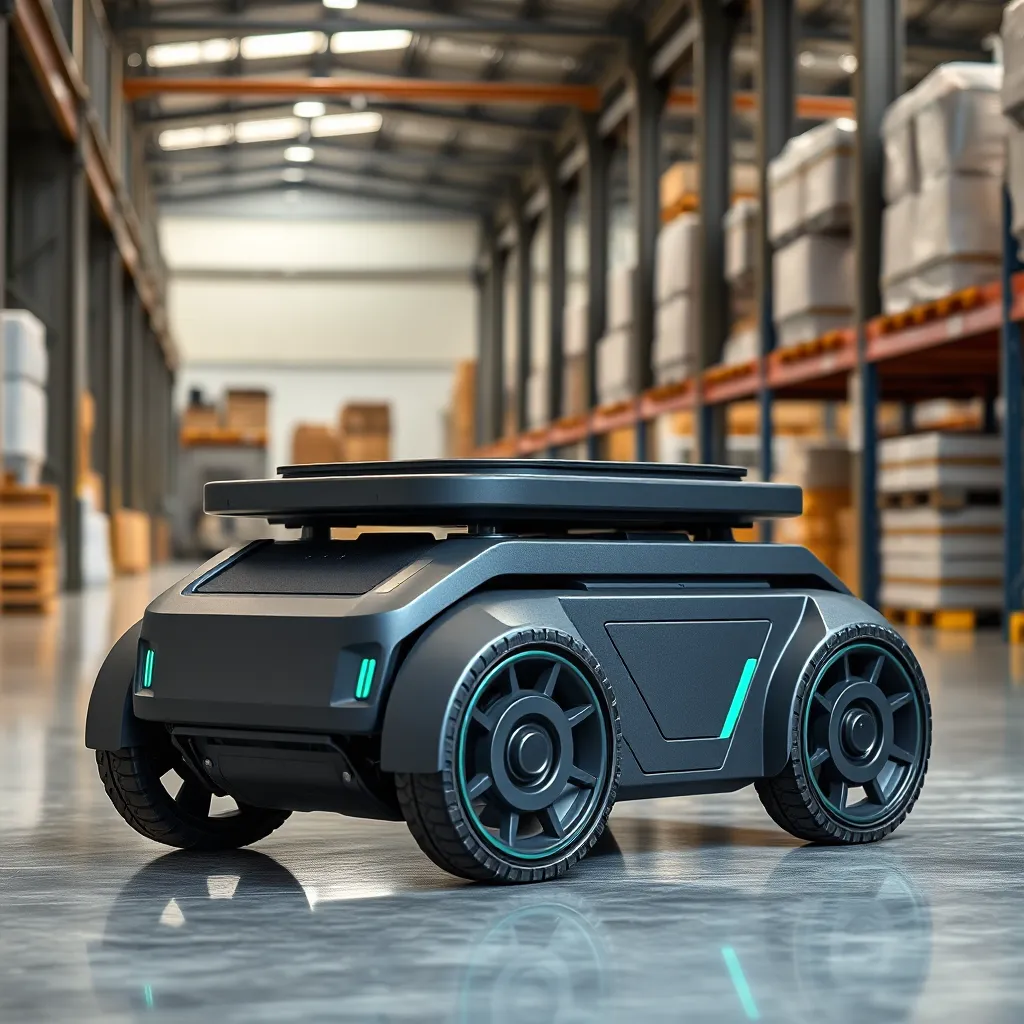
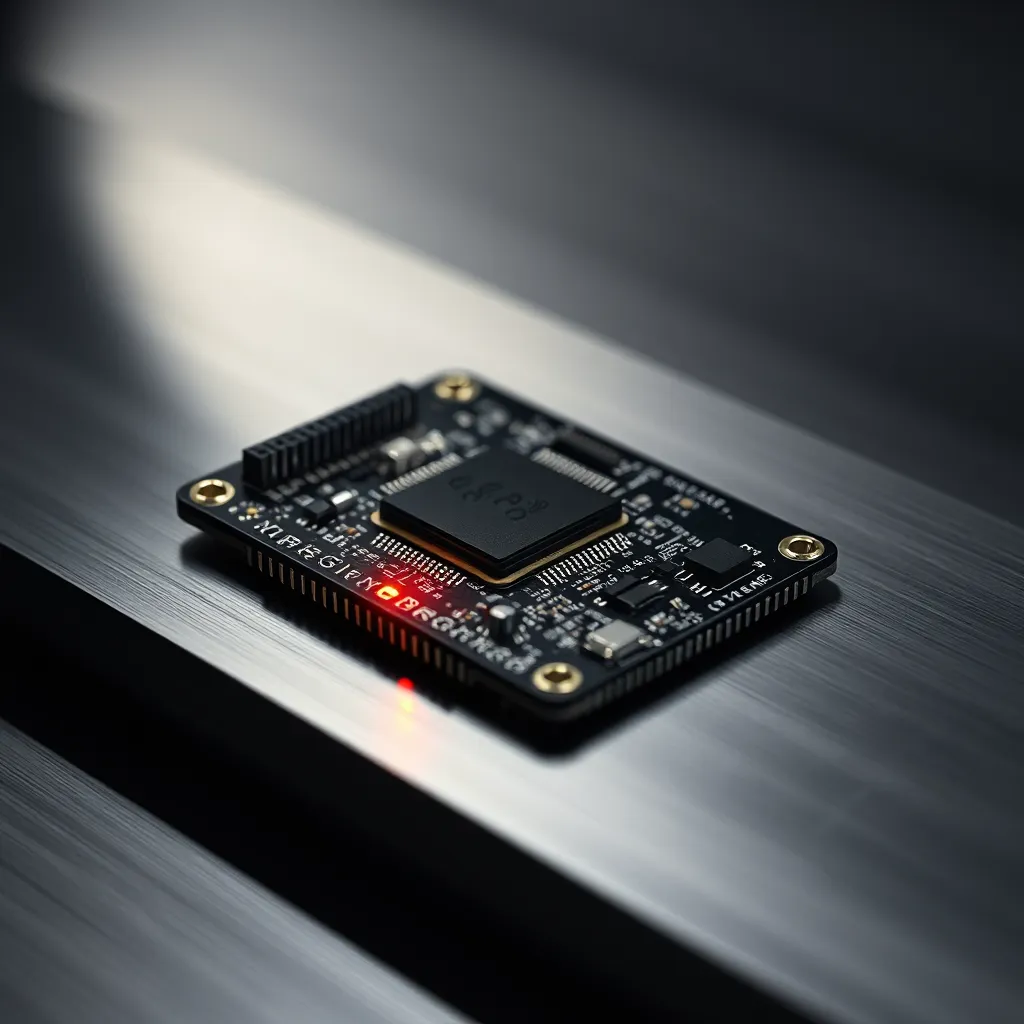

Product renders illustrating edge–robotics hardware, plus a free–form sample — every image generated by veizik’s own FLUX.1-schnell engine on an NVIDIA Jetson AGX Orin. Illustrative output, not a benchmark; each file carries an IPTC AI–generated disclosure.
08Why it matters
Holding quality at the edge changes what a robot product can be.
- Real–time, without the cloud — with no internet and no added latency, the robot decides inside its own body.
- Lower power, lower cost — the same work on a smaller, cheaper device improves unit cost and battery life.
- Privacy — what the camera sees never leaves the device.
- Quality without compromise — you no longer have to trade quality for efficiency, the sacrifice so often made at the edge.
SmolVLA (~450M parameters) was measured on a Jetson AGX Orin. Task success is based on 100 closed–loop episodes of LIBERO–Spatial. Every comparison value was reproduced and measured on the same device, and our engine’s result is confirmed and verified as a win in our internal performance record.
full–precision bf16measured only · tie is not a winreproducible methodologyno competitor figures cited