Generative AI, running on a Raspberry Pi.
veizik runs image, video and language models to completion on a Raspberry Pi — on the CPU today, and alongside a Hailo-8 neural accelerator. No cloud, no desktop GPU. Every figure below is measured on the real boards.
Edge engine — arriving soon
16 frames, 512×512, generated on a Raspberry Pi 5 CPU (~25 min). Diffusion video, no GPU.
A real render, in seconds, on four CPU cores.
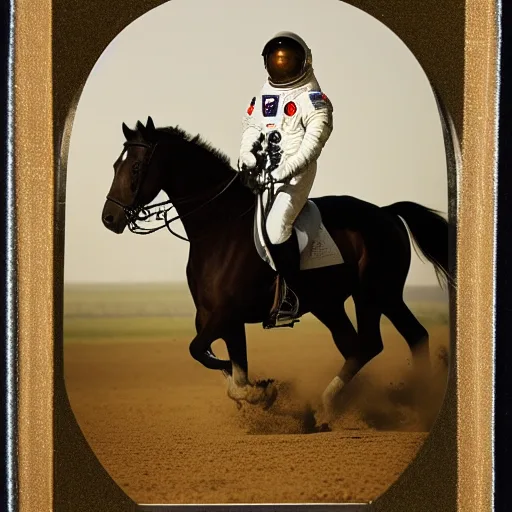
SDXS-512 — a distilled Stable-Diffusion model — renders a 512×512 image in about five seconds on the Raspberry Pi 5 CPU alone, and the result matches the full-precision reference.
warm render, 1 step + decoder, 4 threads @ 2.4 GHz
peak RAM — the whole pipeline fits in memory
PSNR vs the torch reference (latent cos 1.0000)


Prompt: “a photograph of an astronaut riding a horse, full body, detailed, 4k”, seed 42. Numbers are warm end-to-end at 2.4 GHz on the Raspberry Pi 5; the first (cold) image takes 9–12 s. Quality is measured against a full-precision torch render on the same inputs, not asserted as identical.
Fits in memory, finishes every job.
The whole SDXS pipeline runs in 1.9 GB on the Raspberry Pi 5 — comfortably inside the board’s memory. At full clock (2.4 GHz) veizik completed every one of 16 renders with zero resets, on our board and power supply.
at the full 2.4 GHz clock — held stable, no throttling
renders completed at 2.4 GHz — zero resets
CPU only — no accelerator required for this path
The engine’s measurement method and how every figure is taken are on the benchmarks page.
A language model on a palm-sized computer.
The Raspberry Pi Zero 2 W has four cores and 512 MB of RAM. veizik runs GPT-2 and SmolLM2 on it, on the CPU, within that memory — with veizik’s own sub-byte quantization driving throughput up and the footprint down.
| Model (licence) | Precision | tok/s | Peak RAM | Quality (perplexity) |
|---|---|---|---|---|
| GPT-2 124M (MIT) | int8 | 8.19 | 208 MB | +3.3% vs fp32 |
| GPT-2 124M | veizik sub-byte | 12.15 | 96 MB | +4.4% vs fp32 |
| SmolLM2-135M (Apache-2.0) | int8 | 8.80 | 137 MB | PPL 15.73 |
Raspberry Pi Zero 2 W, 4× Cortex-A53, CPU only, fully on-device; the greedy first token matches the full-precision model. veizik’s sub-byte quantization is a proprietary format — the measured throughput and perplexity are shown, the format internals are not.
From a still to sixteen frames.

Images are generated with Stable-Diffusion-family models under the CreativeML OpenRAIL-M licence (which claims no rights in the output; its use restrictions apply). Quality figures are measured against a full-precision reference, not claimed identical. A GPT-2 CPU mode table for the Pi 5 (up to ~138 tok/s) is being finalized and will be added here.
Released one model at a time.
These already run on the edge. As the edge engine ships, each becomes available on its own — model by model, not all at once.
SDXS-512
1-step distilled diffusion. 512×512 in ~5 s on the Pi 5 CPU.
SoonStable Diffusion 1.5
Full 25-step diffusion, matched to the full-precision reference.
SoonAnimateDiff-Lightning
Few-step diffusion video, sixteen frames, on the Pi 5 CPU.
SoonGPT-2
Runs on a 512 MB Raspberry Pi Zero 2 W with sub-byte quantization.
SoonSmolLM2
A compact modern LLM, on-device within a Zero 2 W’s memory.
SoonAdded as they finish
New edge models join the list as each is verified on the boards.
OngoingWorks with the Hailo-8 AI accelerator.
veizik runs on a Raspberry Pi 5 with a Hailo-8 (26 TOPS) AI HAT+, offloading convolutions to the neural accelerator through HailoRT (MIT), with a CPU-NEON fallback for the rest of the pipeline.
Performance results for the Hailo-8 path are pending vendor review and are not shown here. Hailo-8 is a 26 TOPS accelerator; the Hailo-8L variant is 13 TOPS. veizik is not affiliated with or endorsed by Hailo.
The edge engine is on its way.
What you see here is measured on real Raspberry Pi hardware today. The edge engine and its models are being prepared for release, one at a time. The product and benchmarks pages cover the desktop and server engine that is available now.
Raspberry Pi is a trademark of Raspberry Pi Ltd. Hailo and Hailo-8 are names of Hailo Technologies Ltd. Stable Diffusion, SDXS, DreamShaper, AnimateDiff-Lightning, GPT-2, SmolLM2, TAESD, ONNX Runtime and TensorFlow Lite are names of their respective owners. veizik is not affiliated with or endorsed by any of them. Models are used under their published licences (CreativeML OpenRAIL-M / OpenRAIL++-M, MIT, Apache-2.0); generated images are subject to those licences’ use restrictions. Figures are veizik’s own measurements on the stated boards; reproduction recipes are published, the internal measurement method is not.